

I thought that moving to London would mean being surrounded by the memories of royalty, parliamentarians, authors, and heroes. I wanted to visit grand palaces, write like Mary Shelley, solve mysteries like Sherlock Holmes, and become a Jane Austen heroine all while dodging double-decker buses in the pouring rain. I wanted to walk the roads of Shakespeare and the Beatles… for ‘to be or not to be’ may be the question, but Yesterday is definitely the answer.
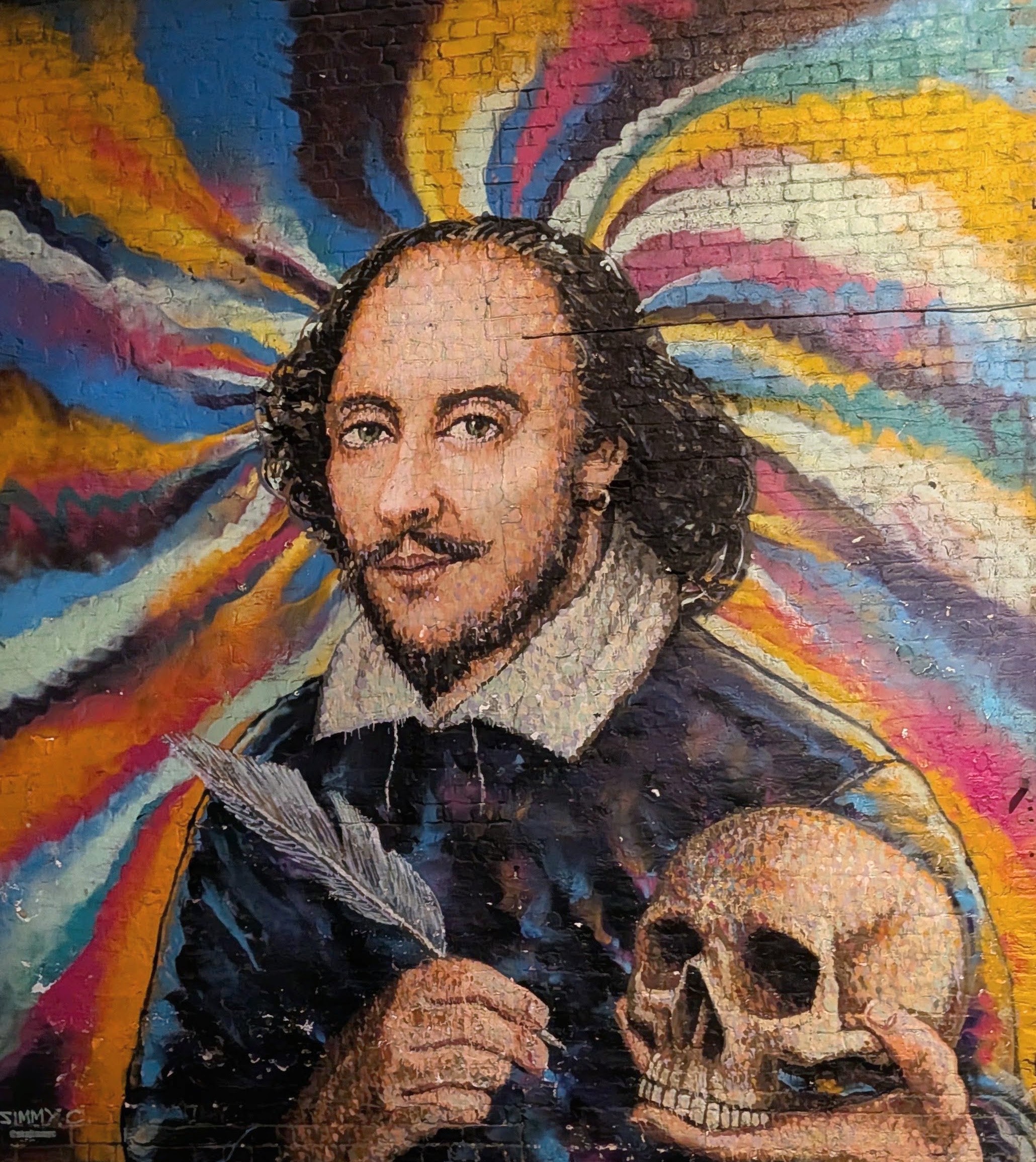
Do not get me wrong, I have had many once-in-a-lifetime adventures… I have spent thrilling evenings in the West End gawking at the sight of Ralph Fiennes dressed as Hamlet. I ran down William III’s Hampton Court staircase while the Pirates of the Caribbean theme song echoed through the stairwell. I stumbled over my words while meeting the Duke of Wellington at the Tower of London. I accidentally touched King Charles’ car while he was in it. I stood at the gates of Buckingham Palace partaking in a deafening round of ‘God Save the King’ while giggling with a group of elderly British ladies. I have spent hours staring at Prince Albert’s massive likeness at the National Portrait Gallery, and I have certainly taken part in some Shakespearean-level tragedies….
But to say that London is nothing as I expected would be the understatement of the century, and it goes much deeper than any trials and tribulations I have faced. For much of my life I have dreamed of England. I have watched and read an endless amount of English history books, TV shows, and documentaries. I have most of the Horrible History songs memorized and have often sung them since arriving. Being surrounded by English history has been both enchanting and humbling… But, for me, it’s not “stay up till 3am listening to Taylor Swift’s Enchanted” level. And it took me a dismally long time to realize why.
I am not your average historian. I love spending endless days with books, in archives, and at museums… but I also dream history, whether I am asleep or awake. When it comes to history, it is like there is a shadow following me, a sense that there is something pulling me to know more. Words on the page are cool and all, but when the scenes can come to life in front of you like a play being staged, it puts you in the center; it makes everything more thrilling. It’s like watching the original cast of Hamilton each and every day… and London has brought me home to my true passion, America.
Since arriving, I have often joked that my personality is equal parts Jeffersonian fascination and Adamsian frustration. London has only reinforced both. It constantly invited curiosity while reminding me that American history did not begin in Philadelphia, Boston, or Williamsburg. Much of it unfolded here, right upon the streets I spend each and every day walking. I didn’t move to London to become more interested in American history (I mean, who knew the fascination could go further). Yet, somehow that is exactly what happened.
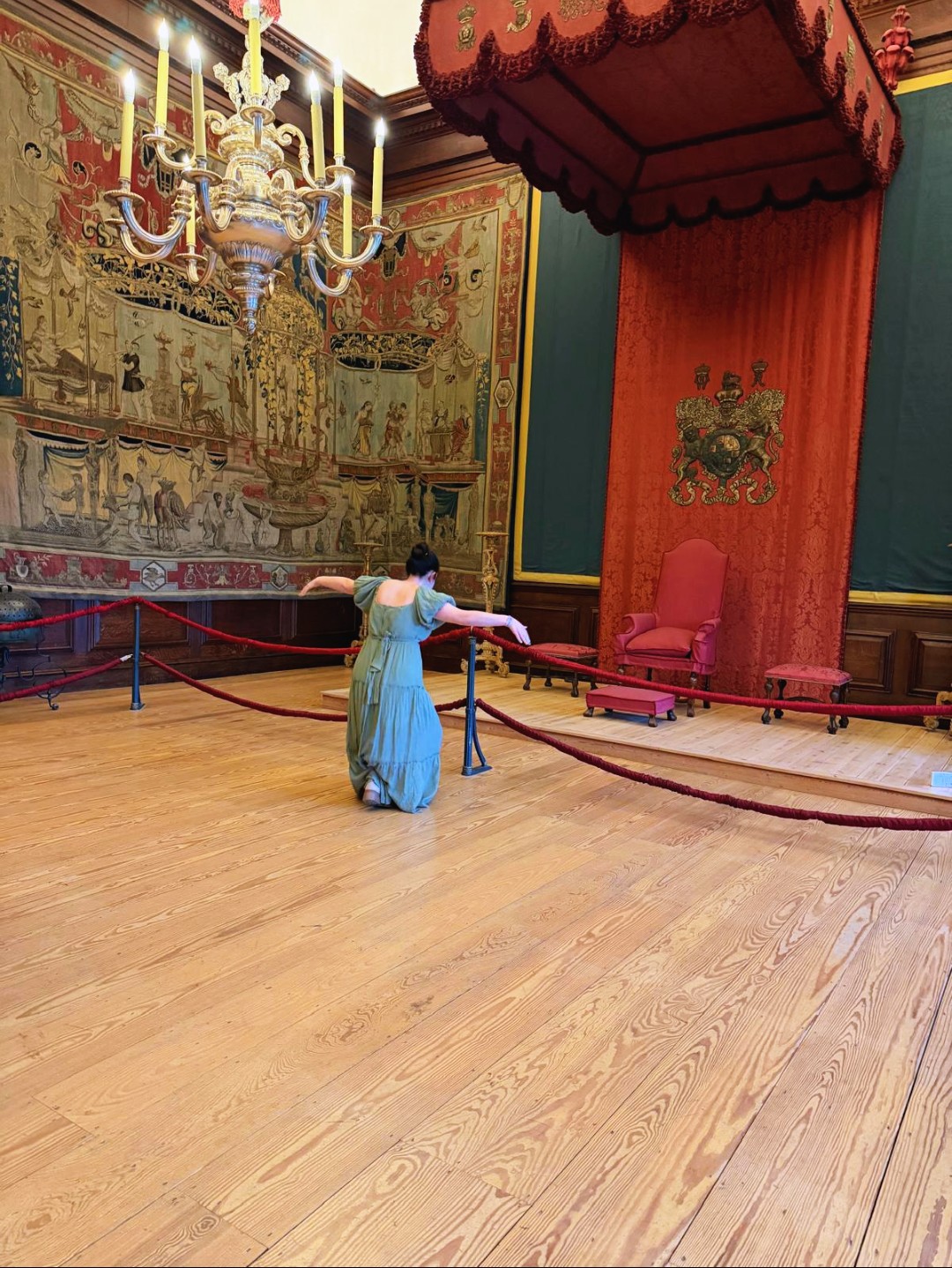
Every grand hall seemed to whisper a different story than the plaques were telling me. Every palace seemed to cast a shadow that stretched across the Atlantic. As Benjamin Franklin once said, “Distance sometimes magnifies objects, and I think I see more clearly…”
And that is what led me here, to the 250th Anniversary of the Declaration of Independence being adopted by the Continental Congress. 250 years since Benjamin Franklin uttered the phrase “we must, indeed, all hang together, or, most assuredly, we shall all hang separately.”
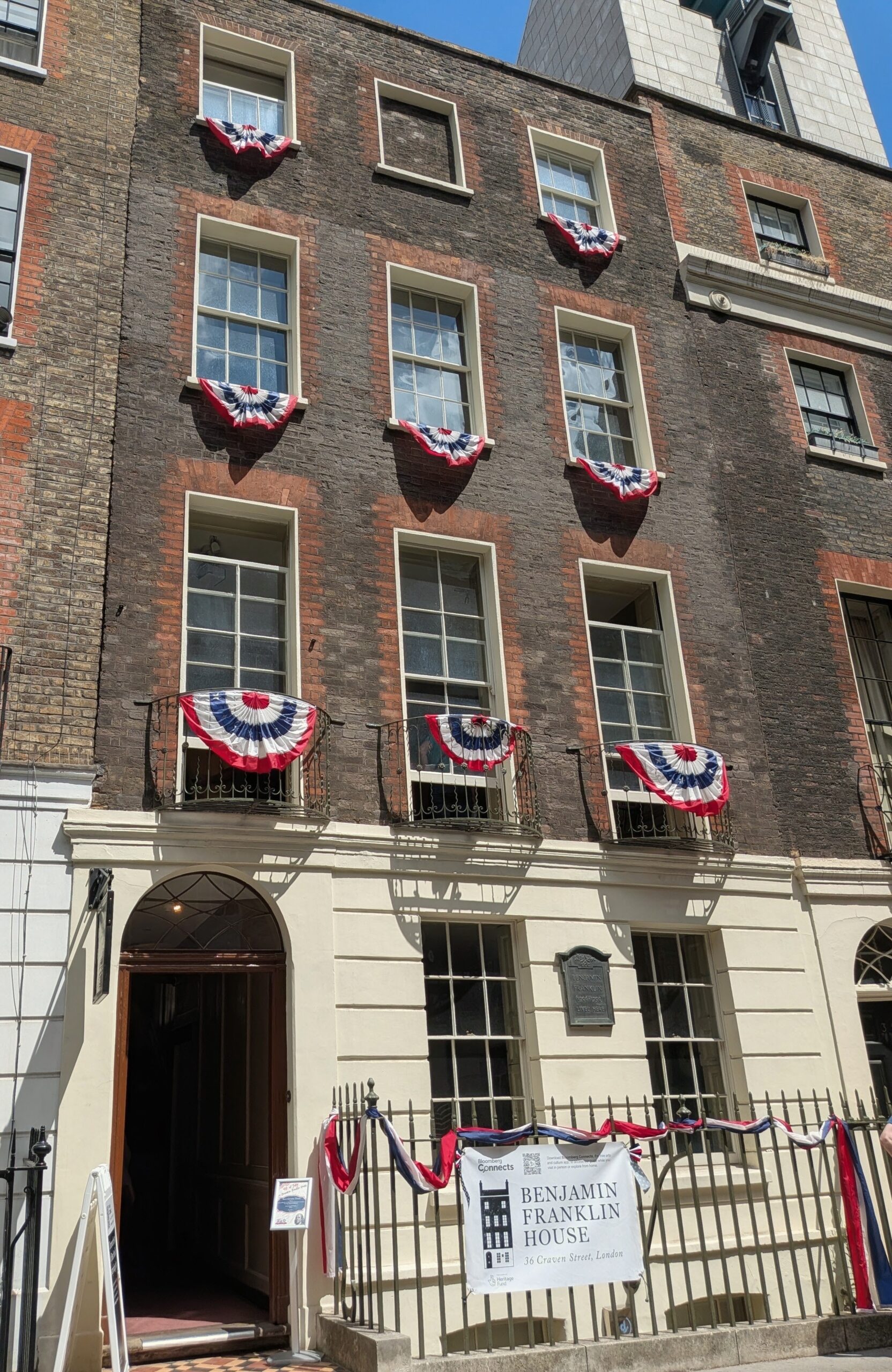
Millions spent July 4th celebrating with fireworks; millions more spent the day voicing their opinions against an American wannabe king… I spent it inside the house where Franklin spent 16 years trying to prevent the Revolution.
Standing in Franklin’s study, it was not difficult to imagine that this quiet Georgian townhouse had once stood at the center of an imperial crisis. Long before he became the elder statesman of the American Revolution, Franklin spent nearly 16 years here trying to save the relationship between Britain and her colonies.
Benjamin Franklin arrived in London as a fervently loyal British subject. In 1757, shortly after his arrival, he moved into 36 Craven Street, just a short walk from Trafalgar Square. It was a building that effectively functioned as the very first American embassy. Within its walls, Franklin invented the Glass Armonica, installed a Franklin Stove, tinkered with an early version of the bifocals, wrote the earliest essays proposing the concept of Daylight Saving Time, and took his infamous ‘air baths.’
Franklin left London believing independence was inevitable. In 1766, he had been interrogated in Parliament for 4 hours in relation to the colonists’ reaction to the Stamp Act, captivating the British public. In the early 1770’s, Franklin received letters the Royal Governor of Massachusetts, Thomas Hutchinson, had written begging London to send more British troops to Boston and saying that to maintain order, “There must be an abridgment of what are called English liberties.” After receiving these letters, Franklin sent them to patriot leaders in hopes that the circulation of the letters would prove that the oppressive policies were the fault of corrupt local governors instead of the King himself. In 1774, in the aftermath of the Boston Tea Party, Franklin was dragged in front of the Privy Council, where he was accused of being a thief, a liar, and an “incendiary” who orchestrated the entirety of the rebellion. He stood motionless for hours, refused to speak, never flinched… He walked in as a loyal Englishman and walked out an American.
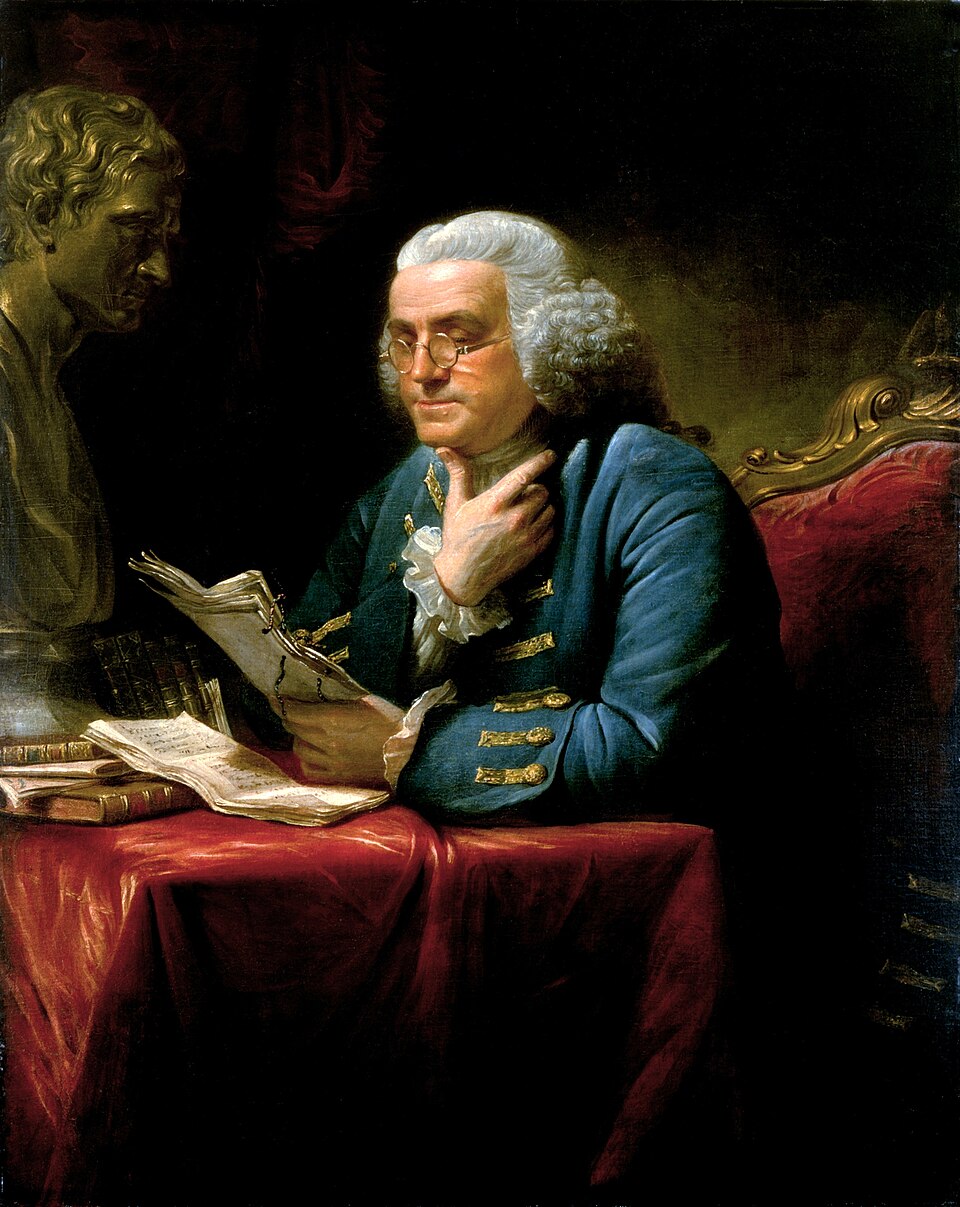
In February 1775, Parliament rejected all peace proposals and declared Massachusetts to be in a state of rebellion. By March, there was a warrant out for Franklin’s arrest. On March 19, his last day in London, he sat with fellow scientist Joseph Priestley at 36 Craven Street as they sifted through American newspapers, choosing articles to publish in London to help the American cause. Priestley later wrote of Franklin and that day that “tears literally ran down his cheeks.”
The very next morning, Franklin slipped out of London never to return. When his ship docked in Philadelphia in May 1775, he would learn of the Battles of Lexington and Concord and the ‘shot heard around the world.’ There was no going back.
Standing within the home that Benjamin Franklin had fled from 251 years ago, on the 250th anniversary of July 4, 1776, felt strangely appropriate. Outside, one of the coolest and biggest Pride parades I have ever seen was taking place. Inside, Americans looking to learn a thing or two filtered through the house before heading off to their next destination. I lingered. For about 5 hours, I examined everything I could, read every sign, wrote endless notes, and (of course) took my picture posing where Franklin had his daily air baths.
I have seen a lot since arriving in England. I have spent so much time studying Henry VIII, William and Mary, Anne Boleyn, Charles Dickens, and so many other historical figures… but nothing has moved me more than standing in the room where, in 1766, Prime Minister William Pitt the Elder negotiated the arguments surrounding the Stamp Act with Benjamin Franklin before walking down the street to the floor of Parliament and successfully arguing for the repeal of the Stamp Act.
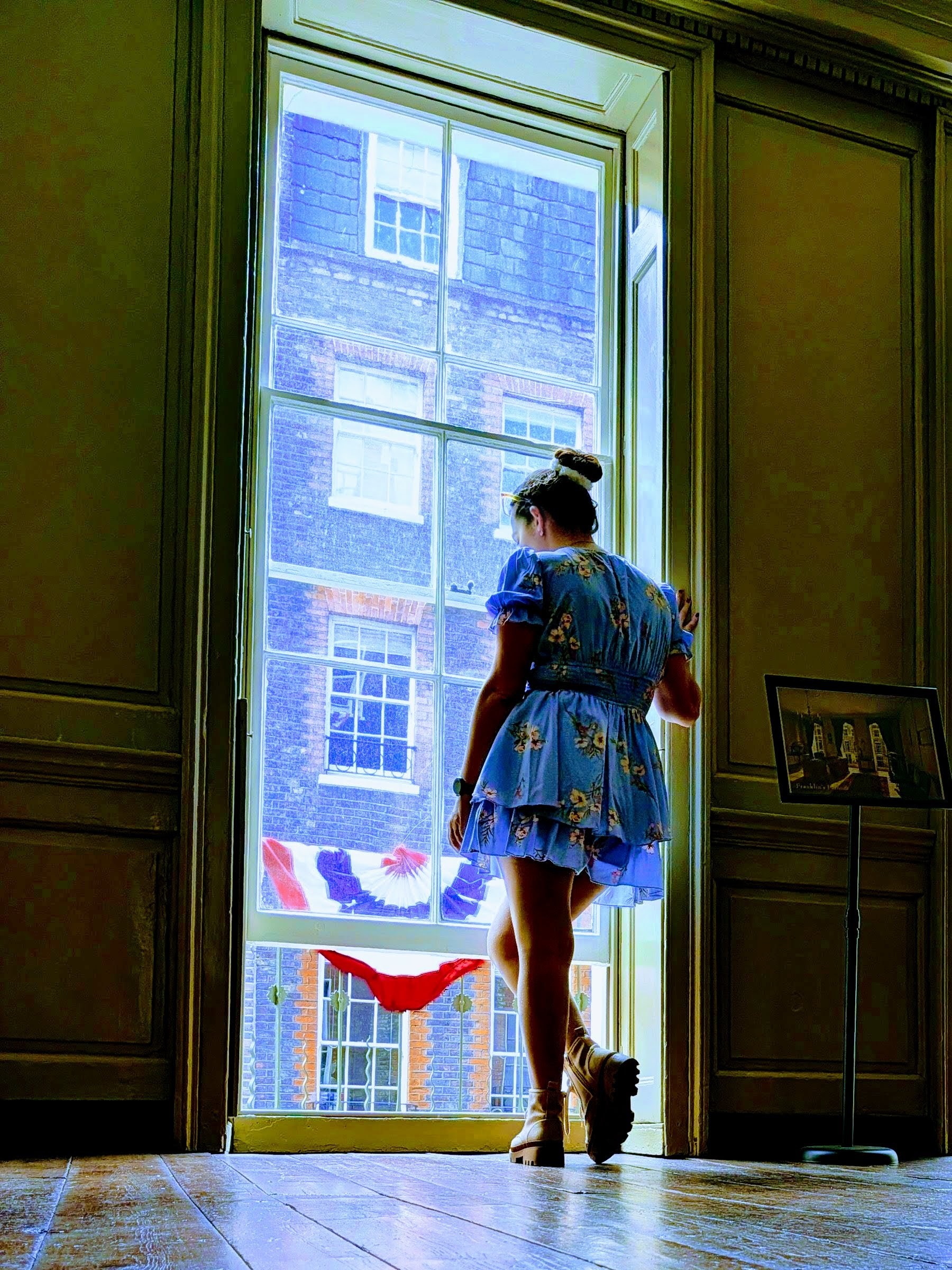
The story of Benjamin Franklin is one of endless trials, tribulations, and devoted patriotism… But not the kind of patriotism we see flooding the streets of America today. Franklin looked for advancement, not glory. He was repeatedly vilified by countries he fought so hard for on both sides of the Atlantic. And, most importantly, he had a truly open mind and was not afraid to admit that he had been wrong about something. Far from perfect, he was one of the only founding fathers to change his mind on the issue of slavery.
Standing in Franklin’s home and climbing the steps he once used for exercise in the endless London rain was truly an inspiring place to take in on the 250th birthday of the United States. It may not have been as chic as ‘colonial flash mobbing’ with a group of teenage history nerds wearing American flag boxers on the streets of Colonial Williamsburg, but boy was it inspiring. Visiting on such an important day reminded me that patriotism has never been about blind loyalty. For Franklin, it meant questioning, learning, changing, and ultimately choosing principle over comfort. I could not imagine a better place to spend Independence Day.
Wow…very moving, great job great insight. Glad your having fun and looking forward to hearing all about it when next we meet!