
I have been involved with many organizations throughout my life. Yet, none has left as big an impact or shaped me as much as the National Institute of American History and Democracy (NIAHD) at the College of William and Mary (in partnership with the Colonial Williamsburg Foundation). As an extremely shy seventeen-year-old, I spent three glorious weeks in their pre-collegiate program, absorbing as much as I could about American history. It was during this program that one of my most memorable experiences was formed.
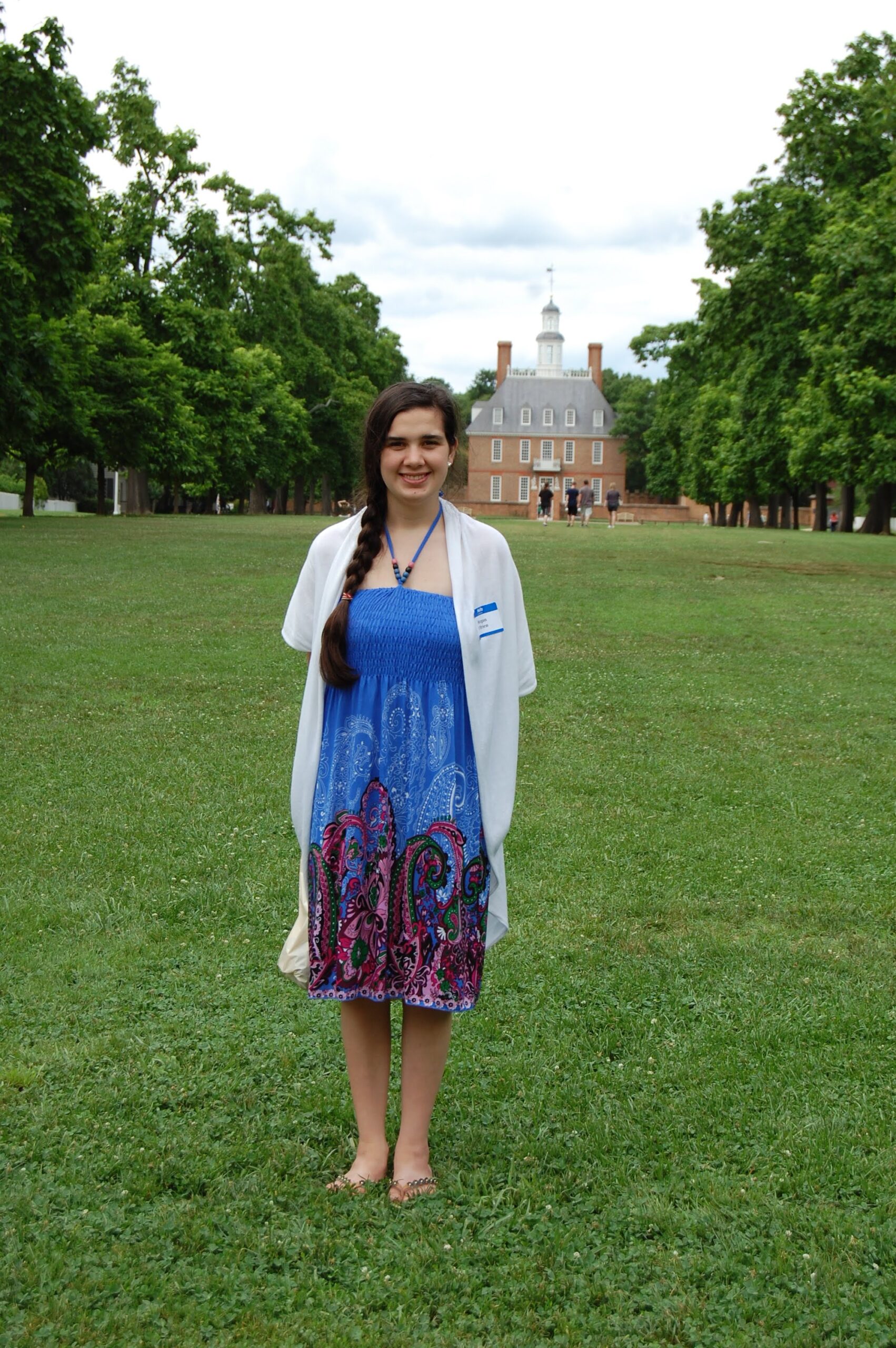
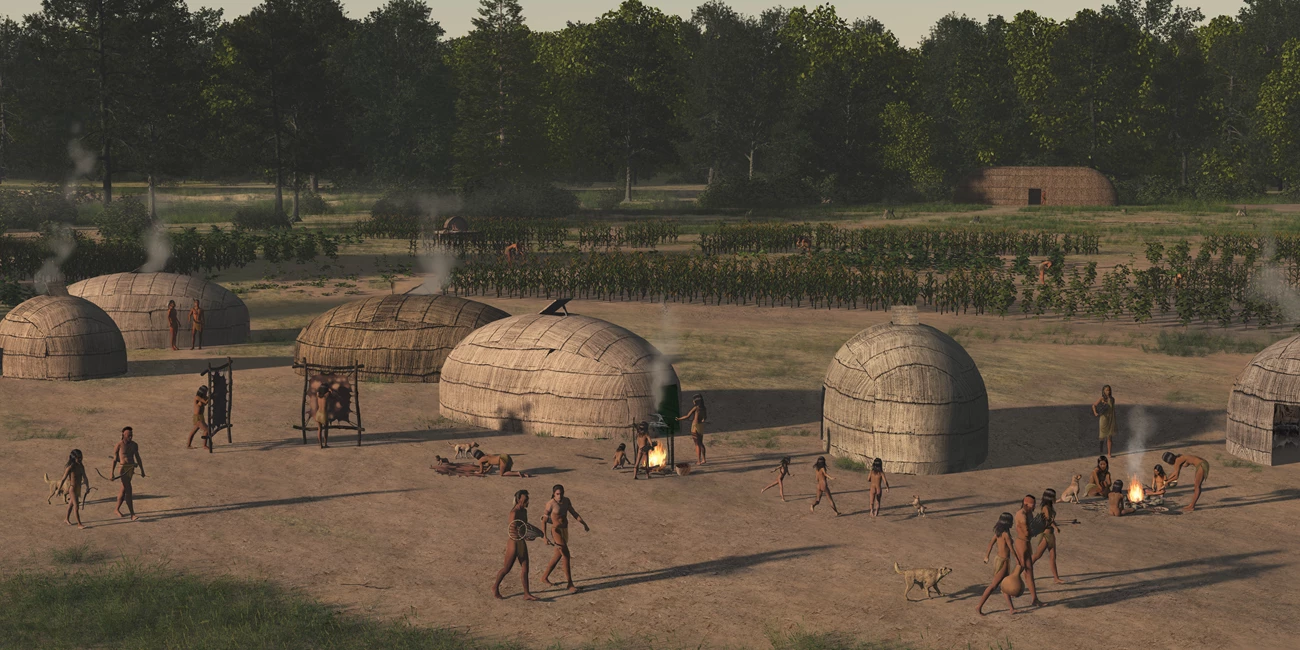
On one of our many van trips, we were driven for what seemed like hours and hours (Google tells me it was probably about 45 minutes) and then unloaded into a field. If you were to visit the site today, you would be standing on National Park land. Back then, we stood on a private farm with a cute little farmhouse and nice big fields. If you had stood on the same site in the 1600’s, it would have been called Werowocomoco.
By the end of my three weeks in Virginia, my friends and I could pronounce the site’s name perfectly, but while standing in the field, we were still struggling with our pronunciation. What was not a struggle was understanding the importance of the land we stood on. Beneath my feet was land that the Powhatan people once lived on, a confederacy of over 30 Algonquian speaking tribes, the core of which was the Pamunkey tribe. Their chief was Wahunsenacawh, and one of his daughters was Matoaka, or as we commonly call her, Pocahontas.
Eleven years after standing in that Virginia dirt, my own life took an unexpected turn across the Atlantic. It is a strange sensation to realize that the history I studied as a teenager in tidewater Virginia now exists, in a different form, beneath my feet every single day. Pocahontas made a similar journey, though under vastly different circumstances.
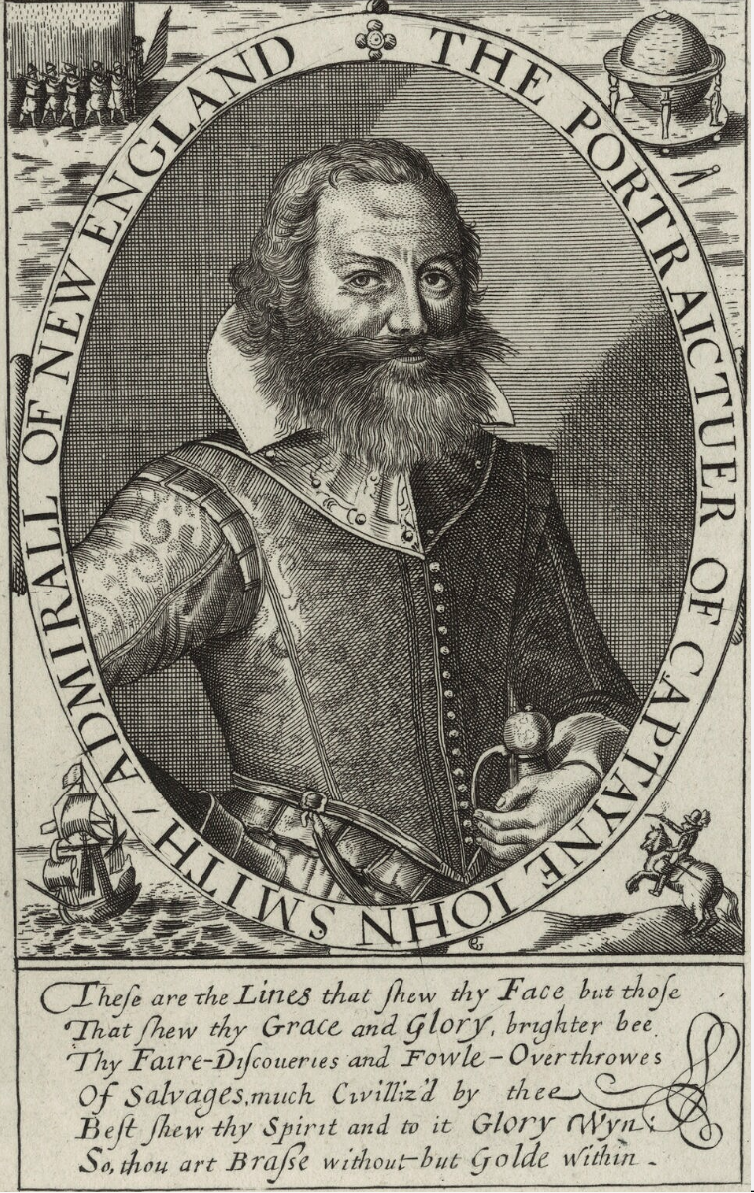
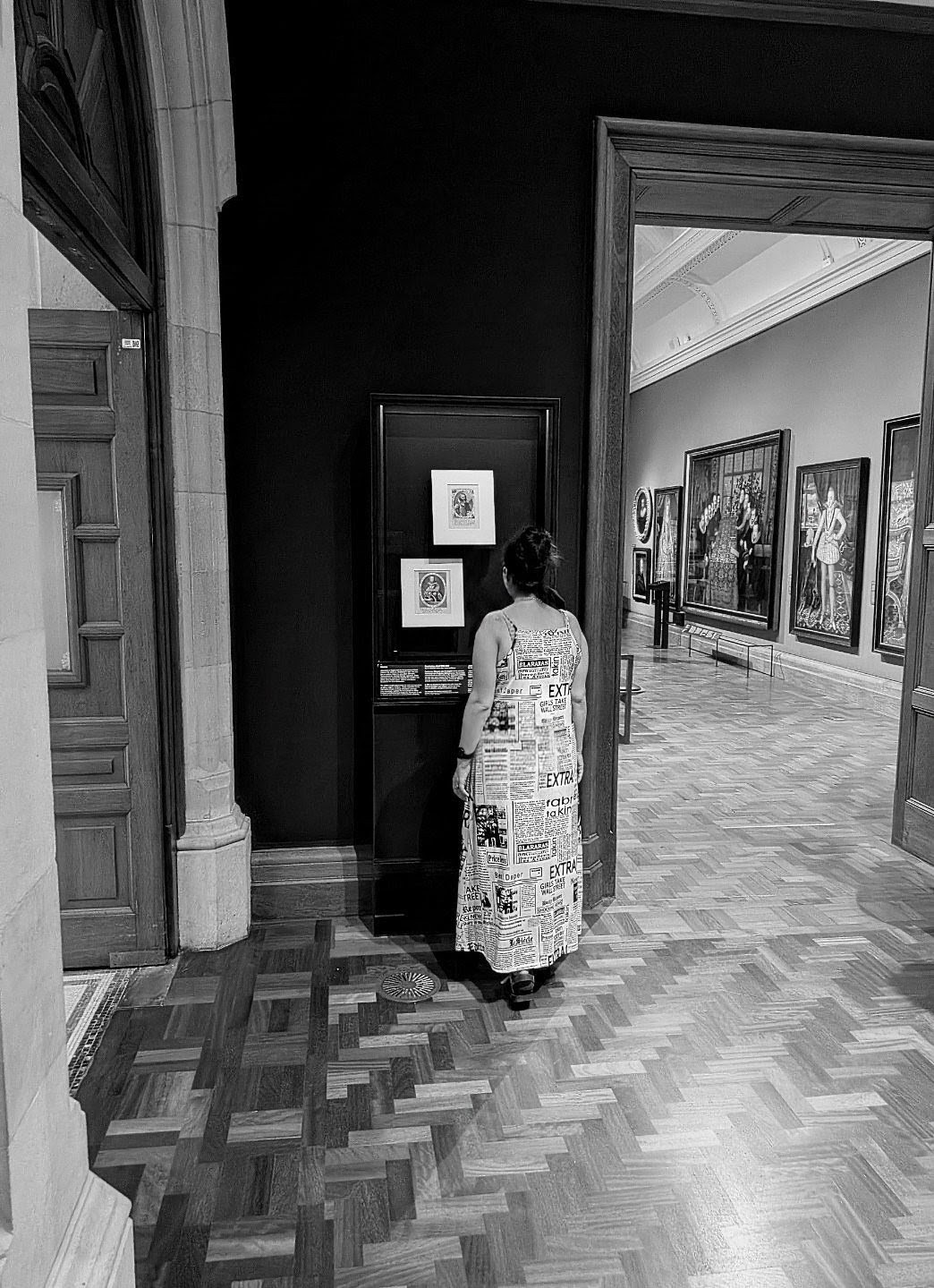
Pocahontas came to London with her husband, John Rolfe, in 1616. It was here, on land that I walk every day, that she was made a spectacle of, and where John Smith made a legend of himself. I am reminded of that NIAHD trip every time I climb the stairs to the third floor of the National Portrait Gallery (a place that I frequent far too often – if there is such a thing). There, in a small case near much larger portraits of King James I and Queen Anne, and placed so near the doorway that most walk right past it without noticing, are two very important engravings.
The first engraving, done in the eighteenth century, is many people’s favorite Disney Prince, John Smith. The given description states that John Smith first sailed to Virginia in December of 1606 and served as governor of Jamestown from 1608 to 1609. It also mentions how he treated the Algonquian people with a mix of diplomacy and aggression. Nowhere does it mention his relationship with or writings of the star of the other etching, Pocahontas.
In the etching of Pocahontas, she is depicted wearing an English dress and holding a fan made of ostrich feathers. The description mentions that she was the daughter of the powerful Algonquian ruler. It also mentions that she provided essential food and information to the colonists but was later taken captive by them. It discusses that, while in captivity, she converted to Christianity, was christened ‘Rebecca,’ and married John Rolfe, a tobacco planter. It also mentions that in 1616 she traveled to England and died on the eve of her return home.
Looking closely at her face, I know the history the plaque omits. I see a girl born around 1596 whose sacred name, Matoaka, was hidden from the English out of fear of spiritual harm. I see a woman who was kidnapped in 1613 during a tense political standoff, held captive for a year while her isolation was masked as a voluntary conversion. The engraving boasts of her marriage to John Rolfe as the ‘Peace of Pocahontas,’ a triumph to secure wealthy investors for the Virginia Company, but looking at her, I see a living exhibit. She was brought to London not as a guest, but as a symbol of a tamed ‘savage’ from the New World, packaged to prove that English civilization had triumphed.
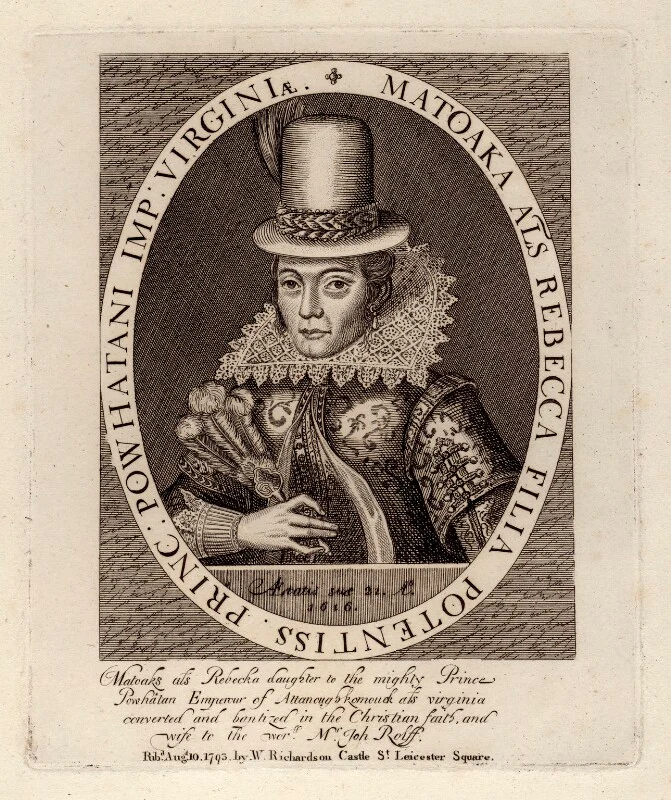
Pocahontas’s etching is located right down the street from Parliament, shoved in a little corner where no sunlight will hit it. While the majority of artworks in the room are large and framed in gold, Pocahontas is rather small and held within a simple glass case, mirroring an engraving of the Gunpowder Plot Conspirators. It is an etching of a woman who will always be central to American identity and the American myth, but here in London she is rarely given a second glance.
I grew up on Disney’s Pocahontas. I stood high on rocks trying to paint with ‘the colors of the wind’ and to be as brave and strong as her. Yet, Disney’s Pocahontas, this engraving’s Pocahontas, and the real Pocahontas will never be one and the same. The Pocahontas that I gaze upon in the National Portrait Gallery is not Pocahontas; it is Rebecca Rolfe, an image of a woman formed through forced assimilation and passed off as a triumph.
The engraving was commissioned by the Virginia Company to prove to investors that Indigenous Americans could be successfully “civilized” and converted. She is portrayed wearing Jacobean court attire, a lace ruff, and a high hat, making her appear like an affluent Englishwoman and completely stripping her of her Pamunkey heritage.
Whenever I see this etching, I try to imagine her in London, perhaps feeling many of the same emotions I occasionally do when I’m so far from home. I picture her traveling along the route between her inn near St. Paul’s Cathedral and Whitehall, unknowingly following many of the same streets I now walk every day. We inhabit the same city, yet entirely different worlds. Where I see cafes spilling onto pavement, buses weaving through traffic, and tourists photographing centuries-old landmarks beneath bright blue skies, she would have encountered a crowded Jacobean metropolis filled with timber-framed buildings, horses, shouting street vendors, and air thick with smoke and soot.
I think of her standing inside the Banquet House more than four centuries ago. We both looked upon King James I beneath Ruben’s magnificent ceiling. The difference, of course, is that she stood before the King himself, while I found myself dancing beneath his painted likeness while a drag queen cheerfully played the role. History has a peculiar sense of humor.
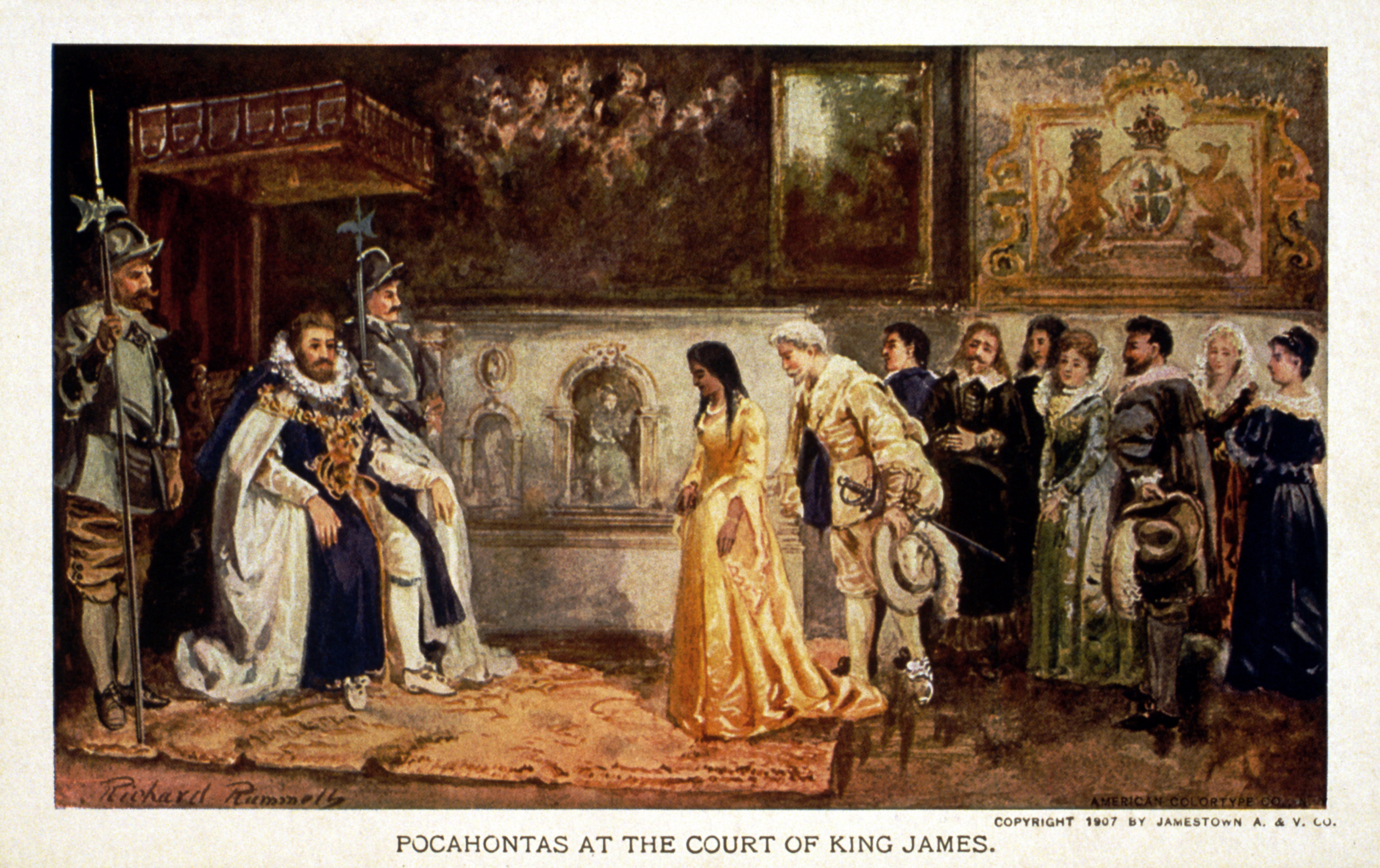
I think of her being made a spectacle of. It is impossible to know exactly what she felt, but I cannot help wondering how lonely that experience must have been.
At the very same time, I am reminded of that day at Werowocomoco eleven years ago. I can still feel the heavy Virginia humidity of that afternoon, the sound of the wind through the trees overlooking the water, and the voice of our beloved ‘Dr. Mr.’ cutting through the afternoon heat. Standing on the literal ground where Wahunsenacawh once governed, Dr. Mr. laid out the stark reality of colonial politics, methodically dismantling the clean, romanticized Disney myth we had all consumed as children. He taught us that history is not a fairy tale. Instead, it is written by the people who hold the printing presses.
The first time I saw the etching of Pocahontas, I actually walked right past it. Out of the corner of my eye, a flash of something vaguely familiar made me backtrack. When recognition hit, I had to be reminded that it was 8:30 p.m. in an art museum.
Staring at her, I am always struck by the quiet, heavy realization that I crossed the same vast ocean she once did, and I walk the very streets she once walked. But I am devastatingly luckier in my circumstances. I move through London in total freedom, while she was a displaced survivor now trapped in plain glass, held parallel to England’s greatest ‘traitors.’